



Atiku’s Fuel Subsidy Plan Will Bankrupt Nigeria, Destroy Credit Rating – IMPI
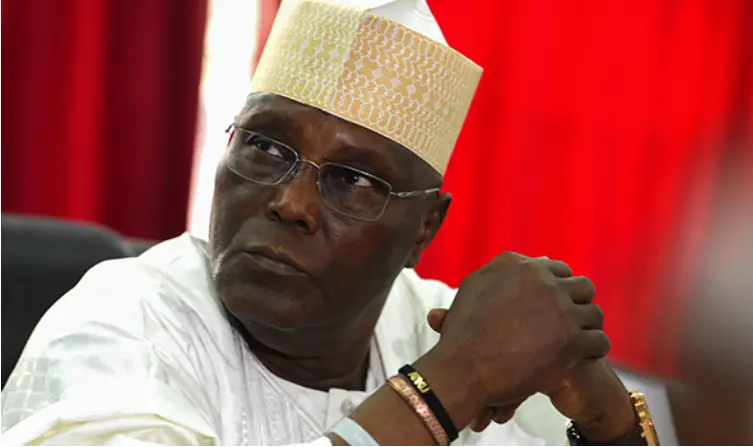

The Independent Media and Policy Initiative (IMPI) has warned that former Vice President Atiku Abubakar’s proposal to restore fuel subsidy if elected president could plunge Nigeria into another cycle of fiscal crisis, weaken investor confidence and ultimately bankrupt the country.
The policy think tank, in a statement signed by its Chairman, Dr Omoniyi Akinsiju, described the proposal as “populist” and a dangerous reversal of the economic reforms undertaken by the President Bola Tinubu administration.
According to IMPI, while a return to fuel subsidy may initially reduce pump prices, the policy would create significant long-term financial and economic distortions.
The group said Atiku’s proposal to re-regulate fuel prices would undermine the Petroleum Industry Act (PIA) 2021 and create an artificial reduction in fuel prices that could eventually trigger shortages and a resurgence of black-market activities.
IMPI said: “This reckless, populist proposal represents a dangerous step backwards and a financial trap that would bankrupt Nigeria, destroy the country’s sovereign credit ratings, and wipe out the economic progress made over the past three years.”
The think tank argued that fixing fuel prices would remove commercial incentives for marketers to distribute products to remote areas, resulting in fuel supplies being concentrated in high-volume urban centres such as Lagos, Abuja, Kano and Port Harcourt.
It warned that the development could force motorists, farmers and transport operators in rural areas to depend on informal fuel markets, with transport costs potentially rising by as much as 40 per cent above current deregulated rates.
According to the group, this would worsen food inflation in urban centres while reducing the profit margins of rural farmers.
IMPI further argued that the proposed subsidy regime could create uncertainty for private investors and international capital by signalling that Nigeria’s petroleum pricing policies could be reversed for political reasons.
The think tank said such uncertainty could affect the funding of major infrastructure projects and undermine public-private partnerships.
It also raised concerns over the impact of price controls on local refineries, particularly large private investments that depend on market-based pricing to service substantial commercial loans.
“Price caps hurt refinery margins,” IMPI said, warning that forcing refineries into politically determined pricing formulas could weaken their cash flows and increase the risk of non-performing loans in the banking sector.
The organisation also projected possible consequences for Nigeria’s sovereign credit rating, arguing that international rating agencies would likely view a return to price controls as evidence of policy instability.
It said such a development could trigger sell-offs in Nigerian Eurobonds, increase sovereign borrowing costs and make access to affordable international capital more difficult.
“While a capped budget framework limits open-ended liabilities, international rating agencies like Fitch and S&P focus heavily on structural policy reversals.”
IMPI further warned that the proposed model could affect Nigeria’s relationship with multilateral lenders, including the World Bank and the International Monetary Fund.
According to the think tank, state intervention to artificially reduce domestic energy prices could be viewed as a distortion of the market and potentially affect policy conditions attached to development financing.
It warned that any disruption to concessional financing would leave the government with greater reliance on expensive domestic borrowing to fund critical infrastructure.
IMPI said Nigeria’s infrastructure deficit could not be sustainably addressed by returning to the fiscal policies that contributed to the country’s previous economic difficulties.
It argued that Atiku’s proposed “Follow-the-Barrel” model, which would replace a direct cash subsidy with a discount on crude oil revenue, could recreate the same cycle of using oil resources to provide short-term relief while sacrificing long-term investments in infrastructure and productivity.
The group said Nigeria should instead sustain reforms that would strengthen roads, healthcare, schools, electricity infrastructure and productive capacity rather than return to what it described as unsustainable fuel subsidy policies.
It maintained that the country’s long-term economic stability would depend on predictable policies capable of attracting private capital, supporting domestic production and reducing dependence on crude oil revenues.
“Reintroducing price controls, even under a production model, signals that Nigeria’s long-term investment rules are volatile. This policy shift would trigger sell-offs in Nigeria’s Eurobonds, spike sovereign yields, and block the country from accessing affordable global capital.
“Relatedly, the model aims to protect local refining, but price caps hurt refinery margins. Private mega-facilities like the Dangote Refinery rely on global pricing logic to service their multi-billion-dollar commercial bank loans. Forcing refineries into complex pricing formulas increases regulatory risk, endangers their cash flows and threatens a rise in Non-Performing Loans (NPLs) across the banking sector.
“On the global financing front, the World Bank and IMF evaluate actual market distortions rather than accounting labels. Because the model artificially lowers local energy prices through state intervention, it would breach the policy conditions tied to outstanding World Bank Development Policy Financing.
“This would freeze ongoing concessionary loan disbursements, forcing the government to fund basic public infrastructure through expensive domestic borrowing,” it added.